Designing for Travelers
Project involved exploring the new meaning of travel for a travel company called Alidays. Creating a product, strategy and artifacts as deliverables.
Scroll to analysis

Role
User Researcher
Designer
Team
Design Mentor
Alidays as a partner
Project Overview
As part of the course Design Strategy and Economics of Innovation, our team was tasked with reimagining the Alidays platform: Design a new product experience and communicate a strategic direction through physical artefacts and a temporary exhibition. But beyond meeting deliverables, we saw an opportunity to redefine how people engage with travel in a post-pandemic world.
A Design Approach to Find Meaning
Unlike the design-thinking approach, innovation of meaning is an inside-out approach that starts from within, and ends with the users. It relies on changing the emotional aspect of design by answering the question “What do I want people to love?”. To answer this question, the IoM framework relies on identifying the drivers of change by observing industry trends, conducting expert interviews, and finally user interviews. We conducted interviews with average representative travellers, cultural experts such as anthropologists, who can identify cultural trends and patterns and industry experts, including pilots and flight crew
The Meaning of Travel → Shifting from Escapism to Mindfulness
Our interviews revealed a clear shift. International travel had become uncertain, even irresponsible. Economic instability meant fewer people could afford to go far, while local tourism felt unfamiliar and underwhelming. Yet beneath it all was a quiet desire: people still wanted to explore—just more mindfully. There was a growing interest in supporting local communities and finding purpose in travel. The question was no longer “Where can I go?” but “How can I travel in a way that matters?” And that’s where our design journey began.
The question was no longer “Where can I go?” but “How can I travel in a way that matters?” And that’s where our design journey began.
Designing for Mindful Exploration
To start, I led a workshop with potential users to map out key tasks. We used open card sorting to understand how they naturally grouped content, which helped shape the platform’s core structure. From there, we built quick paper prototypes—just enough to test whether our ideas made sense in motion.
We walked users through booking a local experience, onboarding as a new traveller, and even adding a tour as a host. Using the cognitive walkthrough method, we identified friction points early. High task completion and clarity—signs that we were building something that didn’t just work, but felt intuitive.
High Fedility
With low-fidelity paper prototypes, we swiftly showcased the initial implementation, and tested the design using the cognitive-walkthrough technique. The test included the onboarding phase, booking tours and adding tours. The results indicated 98% completeness and 94% accuracy. Then we moved towards Hi-fed designs
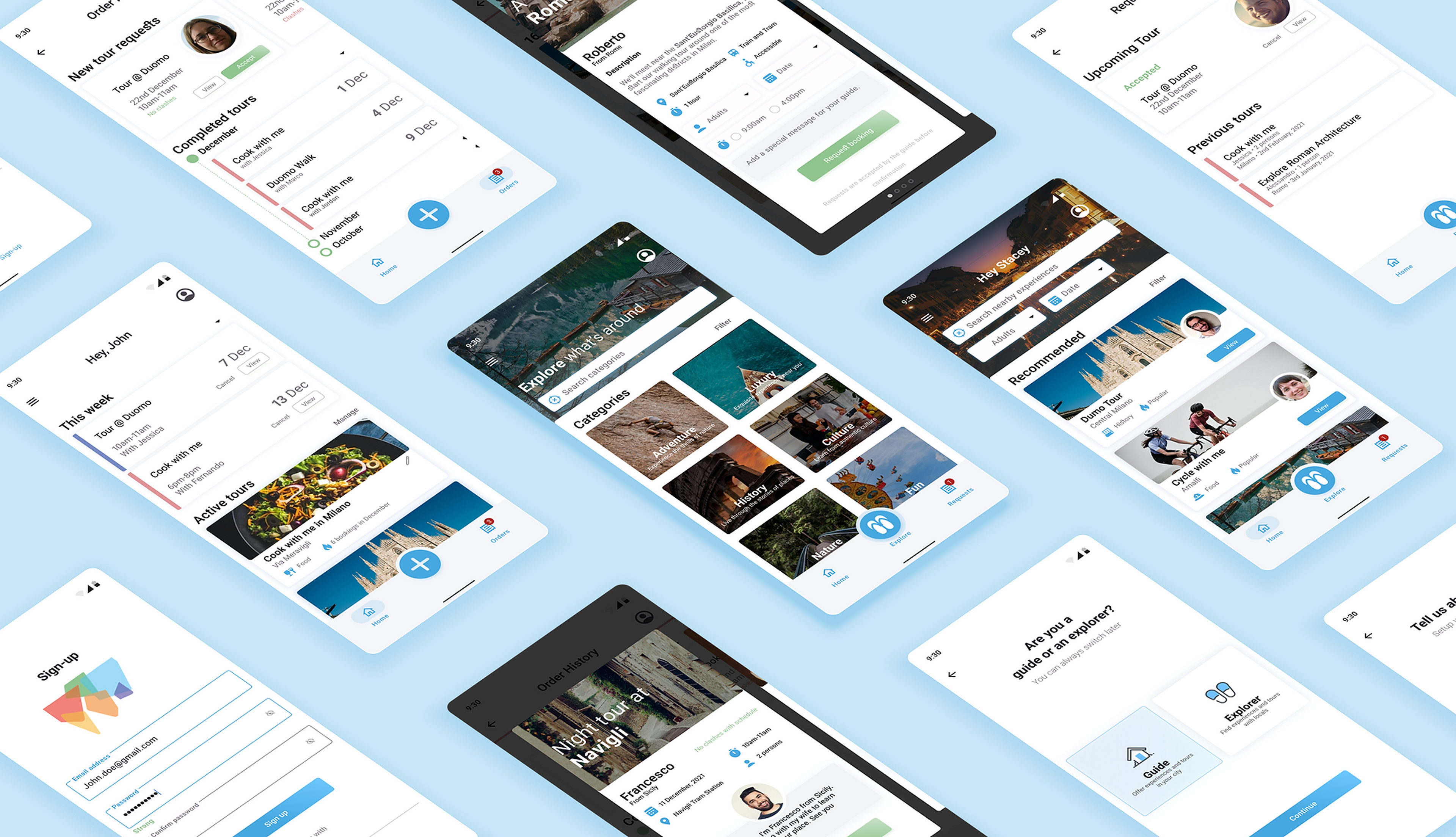
Users can sign up as an explorer or a guide.
Guides can manage schedules, add tours and accept bookings.
Explorers can request bookings and search through view tours around them
Visual Storytelling
Using storytelling as a tool to communicate, the strategic artefacts were developed to showcase the new direction to the stakeholders and potential customers. The artefacts were meant to act as a premise for the exhibition.
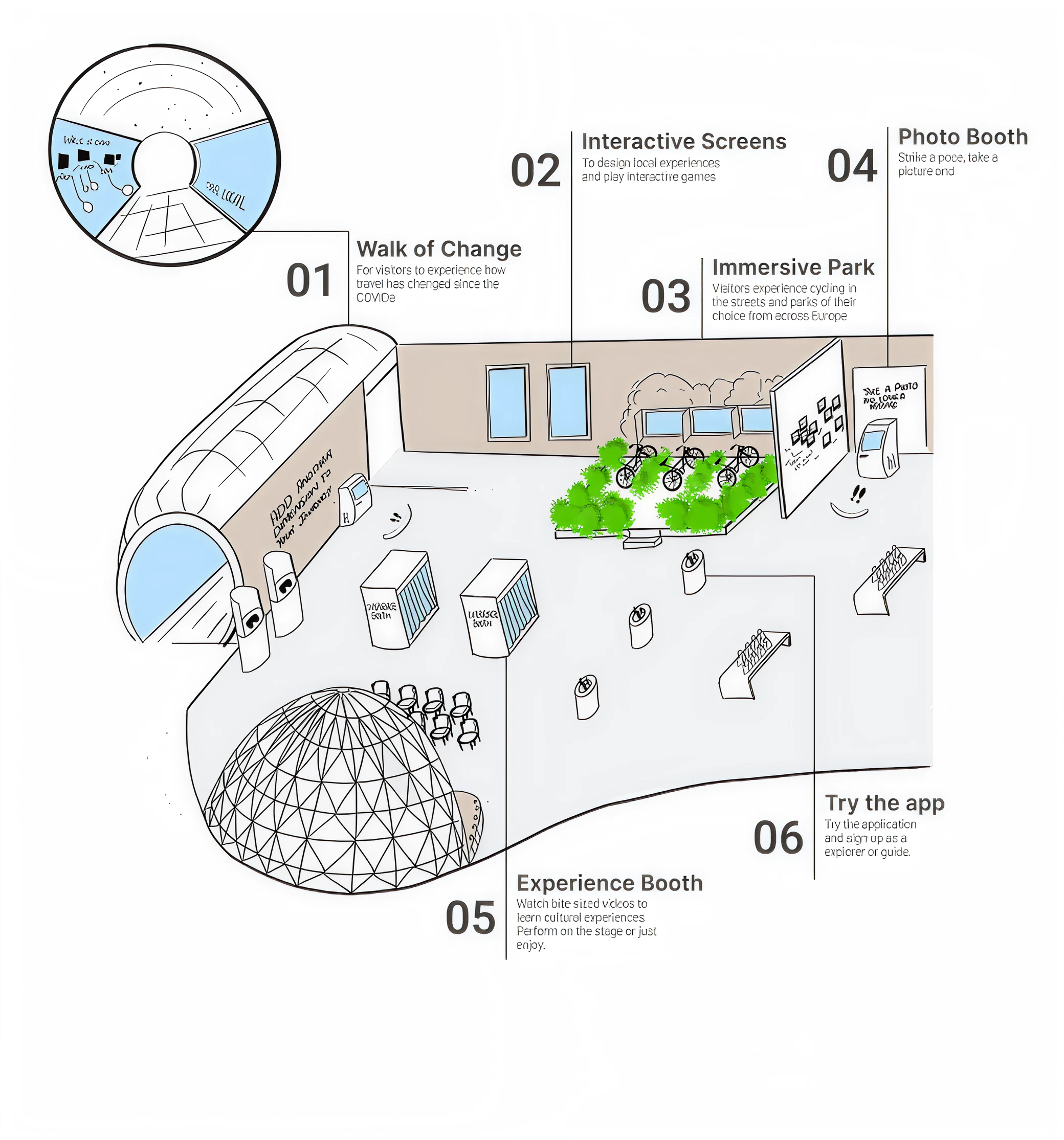
I designed the floor-plan for the exhibition laid out on a 2000 sq ft space with the intention of taking visitors through an experiential journey. I also created the billboard design to display the new manifesto, highlighting the emotional impact of local travel.
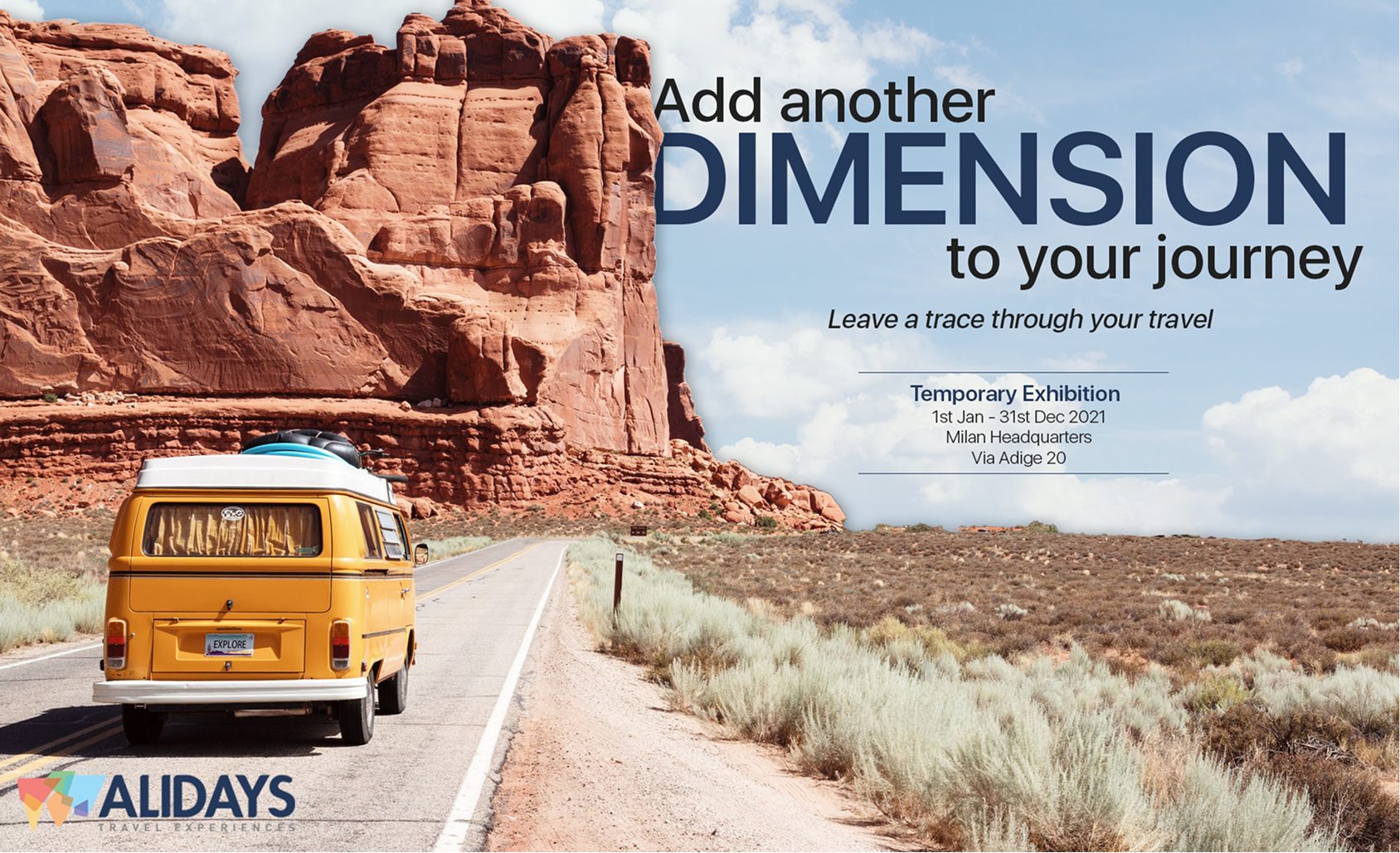
“Add another dimension to you travel” aimed to target the intrinsic value of traveling sustainably and mindfully. The traditional travel truck represents the aspect of “local” travel, most common in Italy.
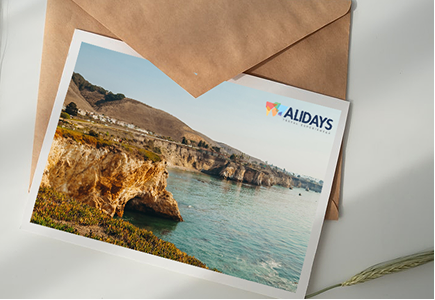
The next part of the artefacts included the invites for the pop-up exhibition. These were meant to be sent to the stakeholders and attendants of the exhibition. The invites were packaged in local wrapping sheets and styles, to give the essence of a postcard being sent from a local town.
Thanks for reading. See my other work
Design for Consistency


afira.chishty@gmail.com
Designing for Travelers
Project involved exploring the new meaning of travel for a travel company called Alidays. Creating a product, strategy and artifacts as deliverables.
Scroll to analysis
Role
User Researcher
Designer
Team
Design Mentor
Alidays as a partner
Board of Directors
Project Overview
As part of the course Design Strategy and Economics of Innovation, our team was tasked with reimagining the Alidays platform: Design a new product experience and communicate a strategic direction through physical artefacts and a temporary exhibition. But beyond meeting deliverables, we saw an opportunity to redefine how people engage with travel in a post-pandemic world.
A Design Approach to Find Meaning
Unlike the design-thinking approach, innovation of meaning is an inside-out approach that starts from within, and ends with the users. It relies on changing the emotional aspect of design by answering the question “What do I want people to love?”. To answer this question, the IoM framework relies on identifying the drivers of change by observing industry trends, conducting expert interviews, and finally user interviews. We conducted interviews with average representative travellers, cultural experts such as anthropologists, who can identify cultural trends and patterns and industry experts, including pilots and flight crew
The Meaning of Travel → Shifting from Escapism to Mindfulness
Our interviews revealed a clear shift. International travel had become uncertain, even irresponsible. Economic instability meant fewer people could afford to go far, while local tourism felt unfamiliar and underwhelming. Yet beneath it all was a quiet desire: people still wanted to explore—just more mindfully. There was a growing interest in supporting local communities and finding purpose in travel. The question was no longer “Where can I go?” but “How can I travel in a way that matters?” And that’s where our design journey began.
The question was no longer “Where can I go?” but “How can I travel in a way that matters?” And that’s where our design journey began.
Designing for Mindful Exploration
To start, I led a workshop with potential users to map out key tasks. We used open card sorting to understand how they naturally grouped content, which helped shape the platform’s core structure. From there, we built quick paper prototypes—just enough to test whether our ideas made sense in motion.
We walked users through booking a local experience, onboarding as a new traveller, and even adding a tour as a host. Using the cognitive walkthrough method, we identified friction points early. High task completion and clarity—signs that we were building something that didn’t just work, but felt intuitive.
High Fedility
With low-fidelity paper prototypes, we swiftly showcased the initial implementation, and tested the design using the cognitive-walkthrough technique. The test included the onboarding phase, booking tours and adding tours. The results indicated 98% completeness and 94% accuracy. Then we moved towards Hi-fed designs
Users can sign up as an explorer or a guide.
Guides can manage schedules, add tours and accept bookings.
Explorers can request bookings and search through view tours around them
Visual Storytelling
Using storytelling as a tool to communicate, the strategic artefacts were developed to showcase the new direction to the stakeholders and potential customers. The artefacts were meant to act as a premise for the exhibition.
I designed the floor-plan for the exhibition laid out on a 2000 sq ft space with the intention of taking visitors through an experiential journey. I also created the billboard design to display the new manifesto, highlighting the emotional impact of local travel.
“Add another dimension to you travel” aimed to target the intrinsic value of traveling sustainably and mindfully. The traditional travel truck represents the aspect of “local” travel, most common in Italy.
The next part of the artefacts included the invites for the pop-up exhibition. These were meant to be sent to the stakeholders and attendants of the exhibition. The invites were packaged in local wrapping sheets and styles, to give the essence of a postcard being sent from a local town.
Thanks for reading. See my other work
Next: Design for Consistency
afira.chishty@gmail.com
Designing for Travelers
Project involved exploring the new meaning of travel for a travel company called Alidays. Creating a product, strategy and artifacts as deliverables.
Scroll to analysis
Role
User Researcher
Designer
Team
Design Mentor
Alidays as a partner
Project Overview
As part of the course Design Strategy and Economics of Innovation, our team was tasked with reimagining the Alidays platform: Design a new product experience and communicate a strategic direction through physical artifacts and a temporary exhibition. But beyond meeting deliverables, we saw an opportunity to redefine how people engage with travel in a post-pandemic world.
A Design Approach to Find Meaning
Unlike the design-thinking approach, innovation of meaning is an inside-out approach that starts from within, and ends with the users. It relies on changing the emotional aspect of design by answering the question “What do I want people to love?”. To answer this question, the IoM framework relies on identifying the drivers of change by observing industry trends, conducting expert interviews, and finally user interviews. We conducted interviews with average representative travelers, cultural experts such as anthropologists, who can identify cultural trends and patterns and industry experts, including pilots and flight crew
The Meaning of Travel → Shifting from Escapism to Mindfulness
Our interviews revealed a clear shift. International travel had become uncertain, even irresponsible. Economic instability meant fewer people could afford to go far, while local tourism felt unfamiliar and underwhelming. Yet beneath it all was a quiet desire: people still wanted to explore—just more mindfully. There was a growing interest in supporting local communities and finding purpose in travel. The question was no longer “Where can I go?” but “How can I travel in a way that matters?” And that’s where our design journey began.
The question was no longer “Where can I go?” but “How can I travel in a way that matters?” And that’s where our design journey began.
Designing for Mindful Exploration
To start, I led a workshop with potential users to map out key tasks. We used open card sorting to understand how they naturally grouped content, which helped shape the platform’s core structure. From there, we built quick paper prototypes—just enough to test whether our ideas made sense in motion.
We walked users through booking a local experience, onboarding as a new traveller, and even adding a tour as a host. Using the cognitive walkthrough method, we identified friction points early. High task completion and clarity—signs that we were building something that didn’t just work, but felt intuitive.
High Fidelity Designs
With low-fidelity paper prototypes, we swiftly showcased the initial implementation, and tested the design using the cognitive-walkthrough technique. The test included the onboarding phase, booking tours and adding tours. The results indicated 98% completeness and 94% accuracy. Then we moved towards Hi-fed designs
Users can sign up as an explorer or a guide.
Guides can manage schedules, add tours and accept bookings.
Explorers can request bookings and search through view tours around them
Visual Storytelling
Using storytelling as a tool to communicate, the strategic artefacts were developed to showcase the new direction to the stakeholders and potential customers. The artefacts were meant to act as a premise for the exhibition.
I designed the floor-plan for the exhibition laid out on a 2000 sq ft space with the intention of taking visitors through an experiential journey. I also created the billboard design to display the new manifesto, highlighting the emotional impact of local travel.
“Add another dimension to you travel” aimed to target the intrinsic value of traveling sustainably and mindfully. The traditional travel truck represents the aspect of “local” travel, most common in Italy.
The next part of the artefacts included the invites for the pop-up exhibition. These were meant to be sent to the stakeholders and attendants of the exhibition. The invites were packaged in local wrapping sheets and styles, to give the essence of a postcard being sent from a local town.
Thanks for reading. See my other work
Next: Design for Consistency
afira.chishty@gmail.com